
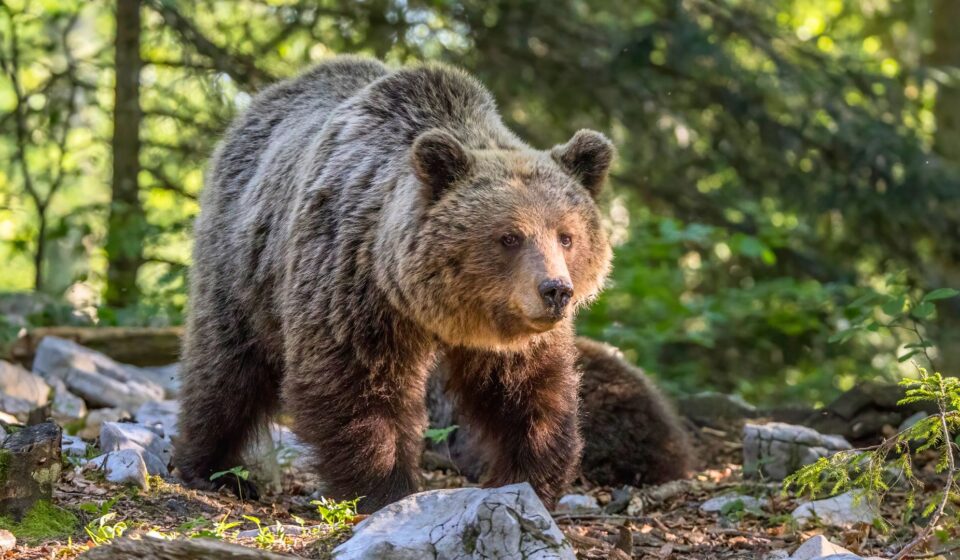
Romania’s rewilded forests are drawing a new breed of traveller: bison, brown bears, and lynx are back — and so are the people who want to find them

Romania’s Southern Carpathians have quietly become one of Europe’s most compelling wildlife destinations. After decades of logging, overhunting, and state-imposed neglect, the region is now home to the continent’s largest concentrations of brown bears, wolves, and lynx — and a bison reintroduction programme that has grown from eight animals in 2020 to a free-roaming population of more than 200. Travellers, increasingly, are following the animals back in.
How the Forests Were Lost — and What Changed
After communism fell in 1989, woodland was returned to private families, prompting widespread unsanctioned logging that destroyed large areas of mature forest.
The Foundation Conservation Carpathia (FCC) formed in 2009 to address the damage. It has placed around 105 square miles under protection and banned hunting across a further 200 square miles.
The Return of the European Bison
Hunting drove the European bison to regional extinction in the mid-18th century. The FCC reintroduced eight bison into the Fagaras Mountains in May 2020; Rewilding Europe and WWF Romania had begun translocating animals to the Tarcu Mountains since 2014.
By late 2024, the free-roaming population in the Southern Carpathians had surpassed 200 animals — what conservationists have called a historic milestone.
Bears, Wolves, and the Wildlife That Stayed
While bison command the reintroduction story, Romania never lost its large carnivores. The country holds more bears, wolves, and lynx than anywhere else on the continent — an estimated 6,000 brown bears alone.
FCC wildlife cabins in the Fagaras Mountains offer overnight stays for bear-watching at dawn. Wolves and lynx, though present in large numbers, remain considerably harder to encounter.
What the Tourism Economy Looks Like
Around 100 local families in the Southern Carpathians are now involved in wildlife-watching tourism tied to the bison reintroduction. Four dedicated bison ranger positions have been created, all filled by local residents.
The EU-backed LIFE with Bison project has secured €5.24 million in funding through 2028, with the European Commission contributing 75 percent of that total.
A Vision for Europe’s Largest Forest National Park
The FCC’s long-term goal is to establish Europe’s largest forest national park in the Fagaras Mountains. The organisation has planted more than 2.5 million saplings and employs over 200 local people as rangers and wardens.
Visitor options include overnight wildlife-watching cabins, a trail-riding centre, and an organic farm — each connected to the region’s growing ecotourism economy.